

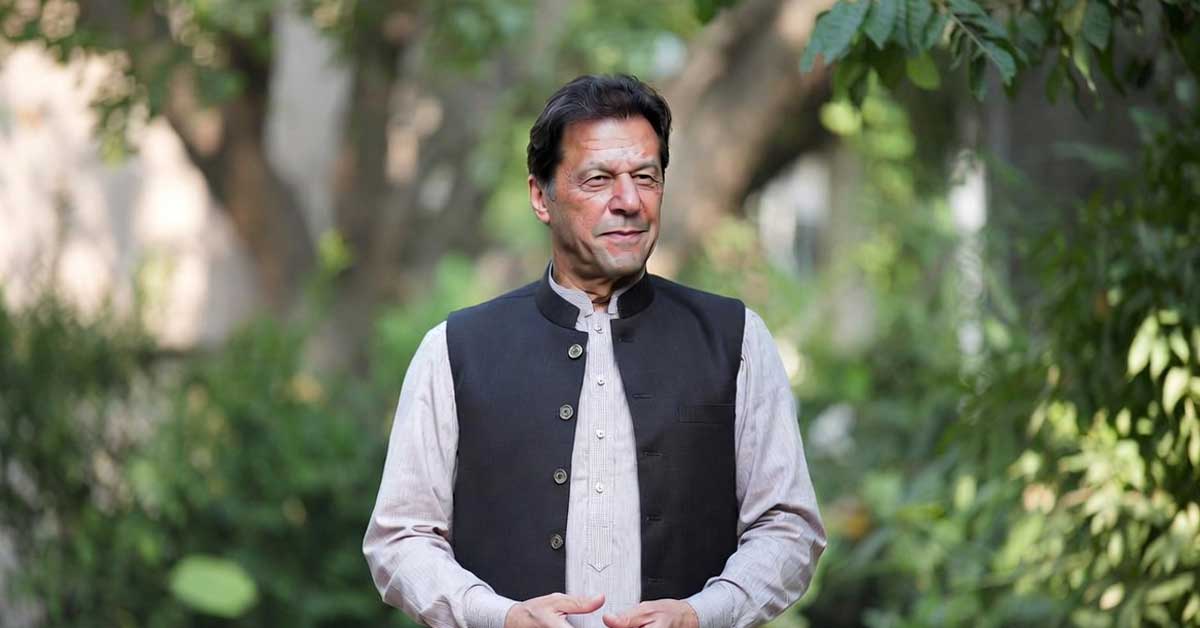
Imran Khan: The Journey of a Cricket Icon Turned Political Revolutionary
Who is Imran Khan
Imran Ahmed Khan Niazi is one of the most recognizable and debated figures in Pakistan’s modern history. Known globally as a legendary cricketer and nationally as a charismatic political leader, Imran Khan’s life represents a rare transition from sports stardom to national leadership. Born in Lahore, Khan rose to fame by leading Pakistan to its first and only Cricket World Cup victory in 1992. Decades later, he entered the political arena with a promise to challenge corruption, reform governance, and establish what he described as a just and welfare-oriented state.
As the founder of Pakistan Tehreek-e-Insaf (PTI), Khan reshaped Pakistan’s political discourse by mobilizing youth, urban voters, and overseas Pakistanis. His rise to the office of Prime Minister in 2018 marked the culmination of more than two decades of political struggle. However, his premiership, removal from power, and subsequent legal and political battles have made him one of the most controversial political figures in South Asia.
Early Life & Education
Imran Khan was born on October 5, 1952, in Lahore, Pakistan, into a well-educated Pashtun family of the Niazi tribe. His upbringing was influenced by discipline, education, and a strong sense of independence. His father, Ikramullah Khan Niazi, was a civil engineer, while his mother, Shaukat Khanum, belonged to a respected family with deep cultural roots.
Khan received his early education at Aitchison College and Cathedral School in Lahore. From an early age, he showed exceptional talent in cricket, a sport that would later define his public identity. As a teenager, he moved to the United Kingdom for further studies, attending Royal Grammar School, Worcester.
He later enrolled at Keble College, University of Oxford, where he studied Philosophy, Politics, and Economics (PPE). His time at Oxford played a crucial role in shaping his worldview, exposing him to Western political thought while reinforcing his interest in leadership and public service. Simultaneously, Khan continued playing competitive cricket, balancing academic excellence with athletic discipline.
Cricket Career: Building a National Hero
Before politics, Imran Khan’s identity was firmly rooted in cricket. He made his international debut for Pakistan in 1971 and quickly established himself as one of the finest all-rounders in the game. Known for his aggressive bowling, powerful batting, and on-field leadership, Khan captained Pakistan for several years.
His defining moment came in 1992, when he led Pakistan to victory in the ICC Cricket World Cup. Battling personal injury and leading a team written off early in the tournament, Khan’s leadership inspired a dramatic comeback that ended with Pakistan lifting the trophy. This victory elevated him to legendary status and cemented his reputation as a leader capable of achieving the impossible.
Khan retired from international cricket shortly after the World Cup, leaving behind a legacy that continues to inspire generations of Pakistani cricketers.
Political Career
Entry into Politics
Following his retirement from cricket, Imran Khan turned his attention to social work and later politics. In 1996, he founded Pakistan Tehreek-e-Insaf (PTI), a party built on the principles of justice, accountability, and opposition to corruption. At a time when Pakistani politics was dominated by established dynastic parties, PTI was initially dismissed as an unrealistic venture.
The 1997 general elections proved disappointing for Khan, as PTI failed to secure significant support. Despite repeated setbacks, Khan remained persistent, believing that long-term political change required patience and grassroots engagement.
Gradual Rise
In 2002, Khan won his first seat in the National Assembly, marking PTI’s formal entry into parliament. Over the next decade, Khan focused on building party infrastructure, organizing large public rallies, and appealing directly to young voters frustrated with corruption and poor governance.
PTI’s momentum surged during the 2013 general elections, where it emerged as one of the leading political forces in Pakistan, particularly in urban centers. Although PTI did not form the government, Khan’s popularity and influence increased significantly.
Prime Minister of Pakistan
In the 2018 general elections, PTI secured the largest number of seats in the National Assembly, enabling Imran Khan to become the 22nd Prime Minister of Pakistan. His victory was seen as a political breakthrough, ending decades of dominance by traditional parties.
As Prime Minister, Khan promised to create a “New Pakistan,” focusing on:
-
Anti-corruption reforms
-
Economic stabilization
-
Poverty alleviation
-
Institutional accountability
-
Foreign policy independence
His government introduced social welfare initiatives, including expanded health insurance coverage and housing projects for low-income citizens. However, his tenure also faced severe challenges, including inflation, economic pressure, and political opposition.
Removal from Office
In April 2022, Imran Khan became the first Prime Minister in Pakistan’s history to be removed through a parliamentary vote of no confidence. The opposition accused his government of economic mismanagement and political instability, while Khan claimed foreign and domestic conspiracies against him.
His removal marked the beginning of an intense political crisis, reshaping Pakistan’s political landscape.
Major Achievements
1. World Cup-Winning Captain
Imran Khan’s leadership in the 1992 Cricket World Cup remains one of Pakistan’s greatest sporting achievements.
2. Shaukat Khanum Cancer Hospital
Inspired by his mother’s struggle with cancer, Khan founded the Shaukat Khanum Memorial Cancer Hospital, providing free or subsidized treatment to thousands of patients annually.
3. Educational Contributions
Khan established Namal University to promote higher education in underserved areas of Pakistan.
4. Political Mobilization
He transformed PTI from a marginal party into a national political force, particularly energizing Pakistan’s youth and diaspora.
Controversies
Imran Khan’s political journey has been accompanied by significant controversy. Following his removal from office, he faced multiple legal cases related to governance, corruption allegations, and political unrest. His arrests and court proceedings have sparked nationwide protests and international attention.
Critics argue that Khan’s confrontational political style deepened polarization, while supporters claim he has been unfairly targeted for challenging entrenched power structures. His strained relationship with powerful state institutions further intensified political tensions.
Personal Life
Imran Khan’s personal life has frequently drawn media attention. He has been married three times, including to Jemima Goldsmith, with whom he has two sons. His later marriages also remained subjects of public debate.
Over the years, Khan has spoken openly about his spiritual evolution, describing a shift toward faith and introspection that influenced his political philosophy.
Legacy & Impact
Imran Khan’s legacy is both powerful and divisive. As a cricketer, he is universally admired. As a politician, he is seen either as a reformer who challenged corruption or as a polarizing leader whose tenure intensified political instability.
Regardless of perspective, Khan’s influence on Pakistan’s political culture is undeniable. He altered voter engagement, amplified youth participation, and challenged long-standing political norms. His story reflects ambition, resilience, and controversy a defining chapter in Pakistan’s national narrative.
FAQs
Who is Imran Khan?
Imran Khan is a former Pakistani cricketer and politician who served as Prime Minister from 2018 to 2022.
When was Imran Khan born?
He was born on October 5, 1952, in Lahore, Pakistan.
Which political party did Imran Khan found?
He founded Pakistan Tehreek-e-Insaf (PTI) in 1996.
What is Imran Khan famous for?
He is famous for winning the 1992 Cricket World Cup and later becoming Prime Minister of Pakistan.
Why was Imran Khan removed from office?
He was removed through a parliamentary no-confidence vote in April 2022.
What philanthropic work has Imran Khan done?
He founded Shaukat Khanum Cancer Hospital and Namal University.